 nubeqasil
Observe the operating context before choosing the screen sequence.

STATUS / RELEASE WINDOW OPEN
Design the interruption before release night.
Nubeqasil builds mobile products around the moment a connection drops, a permission changes, a handoff arrives late or a user must recover without a support script.
RELAY PHASEPHASE 01Find the interruption worth designing.
INTERRUPTION MAP / REAL-WORLD STATES
The useful path includes the break and the return.
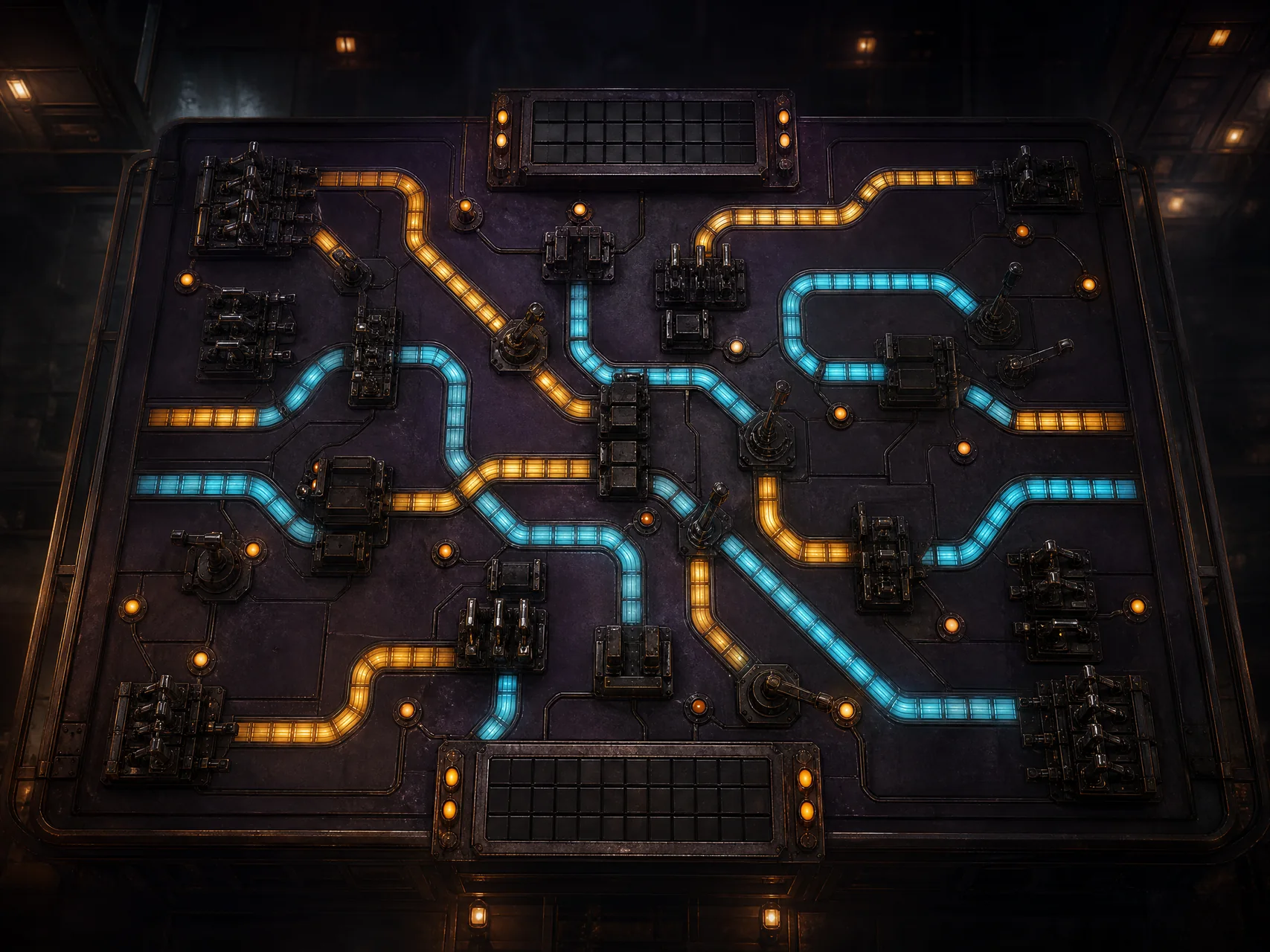
We map what happens before, during and after a disrupted journey so recovery becomes product behaviour rather than a support article.
Connection loss
What can continue, what must queue and what needs a clear boundary?
Permission change
Can the user understand the consequence and choose a safe alternative?
Interrupted task
Does the product preserve intent without creating duplicate work?
Account transfer
Can another person or device continue with the right context?
ARCHITECTURE JUNCTION / CHOOSE THE OPERATING REALITY
One app. Three routes through the same constraint.
Select a direction to see what it protects and what the team must be ready to operate.

ROUTE 01 / NATIVE
Use the platform as a product material.
A dedicated route suits experiences where platform behaviour, performance or deep capabilities are part of the value.
- Protects
- Platform-specific interaction and capability
- Requires
- Clear parity decisions and specialist ownership

PROTOTYPE CORRIDOR / TEST THE TRANSFER
A prototype should expose uncertainty, not disguise it.
We build enough of the journey to test comprehension, interruption and recovery with the people who will actually use the app.
- 01Task entrance
Can the user identify the next useful action?
- 02State change
Does the product explain what changed and why?
- 03Interruption
Can progress survive a pause, failure or handoff?
- 04Return route
Does the user regain context without starting again?
STORE-READINESS ROOM / RELEASE IS A RELAY
A launch passes through more hands than the source code.
Product, engineering, accessibility, privacy, support and operations each need a visible checkpoint and a recovery owner.
Access
Keyboard, screen-reader, contrast and dynamic type checks.
Trust
Permissions, privacy language and data lifecycle review.
Operation
Telemetry, incident path, support context and release control.
Continuation
Handoff, maintenance priorities and known trade-offs.

RELEASE BRIEF / CONTACT
Tell us where the mobile journey loses context.
Describe the user, the interruption, the operating conditions and the release decision now waiting.
[email protected]FINAL CHECK / FREQUENT QUESTIONS
Questions after the route has been mapped.
Can you improve an app already in the stores?
Yes. We identify the operating problem, interruption path and release constraints before recommending a redesign or rebuild.
How do you choose native or cross-platform?
The choice follows required capabilities, interaction quality, team ownership, shared logic and the expected change profile.
Can offline behaviour be added later?
Sometimes, but reliable offline work often changes data ownership, conflict handling and interface states, so early design is safer.
Do you support store-readiness work?
Yes. Scope can include accessibility, permissions, telemetry, release gates, support context and handoff materials.
What remains after delivery?
The agreed handoff may include architecture decisions, release guidance, known trade-offs and a continuation plan—not only source files.
No matching signal. Add the question to the release brief.